
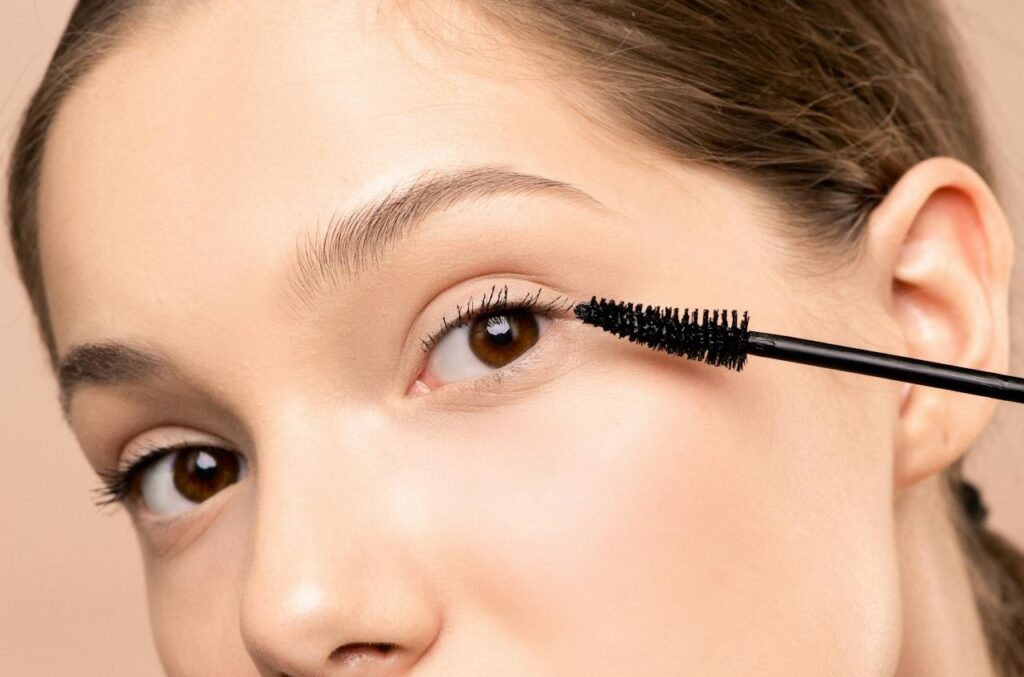
Mascara can make your lashes look longer, darker, and fuller—but traditional mascara does not make eyelashes biologically grow longer. It’s a cosmetic coating effect that washes off. Below, I’ll explain why mascara doesn’t affect lash follicles, what can influence lash length over time, and what to use if you want healthier, less breakage-prone lashes.
Disclosure: This page may contain affiliate links. If you buy through our links, we may earn a small commission at no extra cost to you. Learn more.
Medical note: This article is for informational purposes only and isn’t medical advice. If you have sudden lash loss, eye pain, swelling, or persistent irritation, check with an eye doctor/clinician.
What Is Mascara?
Mascara is used to enhance the appearance of eyelashes. It typically comes in a tube or small container with a mascara brush applicator and is available in various formulas, including waterproof, washable, tubing, volumizing, lengthening, and curling. The primary ingredients in mascara include pigments, oils, waxes, and preservatives, which work together to coat the lashes and create the desired effect. If you have sensitive eyes or wear contacts, choose fragrance-free formulas when possible and stop using a mascara immediately if you feel burning, itching, swelling, or redness.
Tip: Replace mascara every 2–3 months (or sooner if it smells “off” or causes irritation) to reduce the risk of irritation and contamination.
The Myth of Mascara-Induced Growth
The notion that mascara can make your eyelashes grow longer is a common beauty myth. Mascara may coat your lashes—and some formulas add fibers—to temporarily lengthen and volumize them, but most traditional mascaras are not formulated to change your lash-growth cycle. They mainly work by coating lashes to improve how they look until you remove the product.
Here’s how mascara creates the appearance of longer lashes:
- Pigmentation: Mascara adds color to the lashes, making them more visible and giving the illusion of thickness and more length.
- Coating: The waxes and oils in mascara coat each lash, adding volume and a sense of fullness.
- Lengthening fibers: Some mascaras contain tiny fibers that adhere to the tips of the lashes, creating a temporary extension look.
These effects are purely cosmetic, and they last only until the mascara is removed.
Eyelash Growth: The Biological Perspective
Eyelash growth is a natural process influenced by genetics and health. Things like age, hormones, nutrition deficiencies, irritation, and rough removal habits can affect shedding and breakage (which often gets confused with “growth”).
This cycle consists of three phases:
- Anagen (Growth Phase): This is when lashes actively grow. The exact length varies by person (and even by lash follicle).
- Catagen (Transition Phase): This brief phase occurs when the hair stops growing and disconnects from the follicle’s support system.
- Telogen (Resting Phase): During this phase, the lash rests before eventually falling out and being replaced by a new one.
The full lash cycle often takes a few months, but timing varies with age, genetics, and health factors.
Products That Can Support the Look of Longer Lashes
While traditional mascaras do not promote eyelash growth, certain products and treatments are specifically designed to support fuller-looking lashes over time or, in some cases, stimulate growth under medical guidance.
These include:
- Eyelash serums: Some serums may improve the look of lash density/length over time. Prescription options (such as bimatoprost) may increase lash growth for some people, but they also come with potential side effects and should be used under medical guidance.
- Important safety note (lash-growth serums): Products with prostaglandin analogs (often ingredients ending in “-prost”) may cause eye irritation/redness and can darken eyelid skin; in rare cases, iris color may darken and can be permanent. If you have eye conditions, glaucoma, or pressure issues, ask an eye doctor before use. Stop use and seek medical advice if you experience persistent redness, pain, swelling, or vision changes.
- Biotin supplements: Biotin supports normal hair health, but supplements tend to help most when someone has a deficiency or a medical reason for low biotin. For many healthy people, evidence that biotin makes lashes grow longer is limited. Also, high-dose biotin can interfere with certain lab tests—tell your clinician if you take it. Avoid mega-dosing unless a clinician recommends it.
- Nutrition: A balanced diet with enough protein, iron, zinc, and vitamins (A, C, D, E, and B-complex) supports hair and lash health. Nutrition won’t “force” new lash growth overnight, but it can reduce shedding linked to deficiencies. If you suspect a deficiency (like iron), it’s better to test first rather than self-supplement without guidance.
The Role of Conditioning Mascara
Some mascaras are formulated with conditioning ingredients such as peptides, vitamins, and natural oils. While these ingredients can help strengthen and protect the lashes, they do not directly cause them to grow longer. Think of conditioning mascaras as “lash protection,” not “lash growth.” Less breakage can make your lashes look longer over time because more of your natural length stays intact. In other words: conditioning helps with retention, not faster growth. The biggest “growth-like” improvement most people see comes from preventing breakage: gentle removal, fewer coats, and not sleeping in mascara.
Frequently Asked Questions
Mascara itself isn’t “bad,” but sleeping in mascara, harsh rubbing, and tugging during removal can increase breakage and fallout.
Primers mainly improve the look of mascara and can condition lashes. Some “serum-primers” may help reduce breakage, but they shouldn’t be described as changing the lash-growth cycle unless there’s solid clinical evidence for that specific product/ingredient.
Often several weeks, and results vary by person and product.
It can if it’s removed harshly or if you frequently rub your eyes. The product isn’t the issue as much as friction + tugging at the lash line.
Conclusion
In summary, mascara is an effective tool for enhancing the appearance of your eyelashes. It can make lashes look longer instantly, but it doesn’t change how lashes grow. The apparent lengthening effect of mascara is purely temporary. If you want lashes that truly look fuller over time, focus on gentle removal, avoiding rubbing, replacing old mascara, and considering clinically-supported options (with safety guidance) if needed. If you’re considering prescription lash growth treatments, have eye conditions, or notice sudden lash loss/irritation, consult a clinician for personalized guidance.
Recommendation
Additionally, you can use a serum-infused lash primer under mascara to get a smoother, longer-looking finish. These primers may help condition lashes and reduce breakage, which can make lashes look healthier over time—but they don’t change your natural lash-growth cycle. Results vary by lash type and application technique, and any “length” you see from primer/mascara is a cosmetic effect that washes off.
Maybelline Lash Sensational Sky High Serum Infused Tinted Lash Primer: Review, features, and performance, including how it applies, how it wears, and what kind of lengthening look you can expect.